
Machine Embroidery Punjabi Suit vs Hand Embroidery: Which Suits You?
25 November 2026
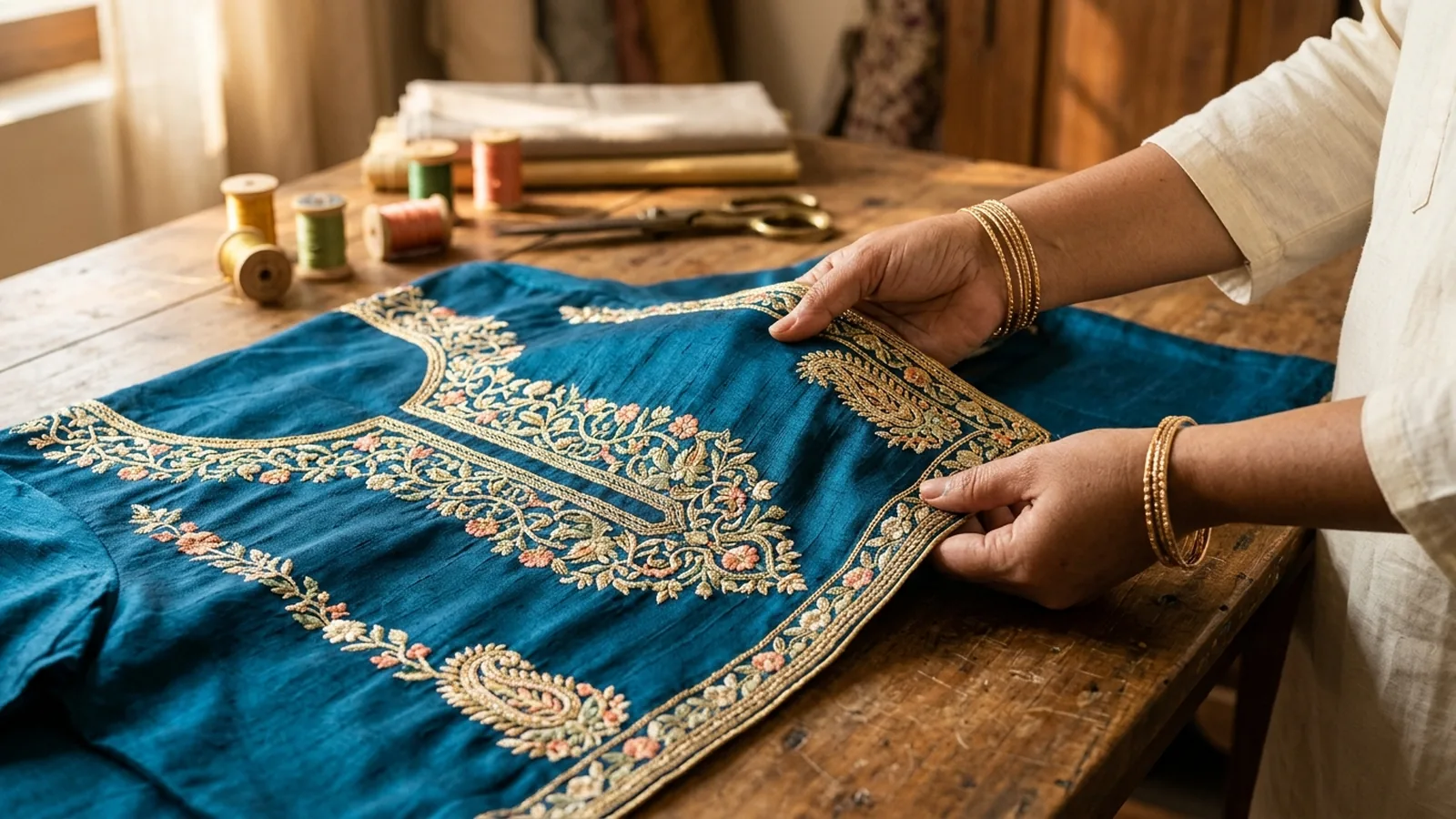
Compare a machine embroidery Punjabi suit with hand embroidery—an honest look at finish, stitch detail, weight, and practical turnaround.
When planning a custom women's outfit, one question comes up naturally: should you choose a machine embroidery Punjabi suit or go for traditional hand embroidery? Both crafts have a proud place in festive and everyday wardrobes, and neither one is universally better than the other. The right choice depends on the look you love, how you plan to wear the suit, and your timeline.
At Rai Designer, we design every pattern in our own embroidery software and stitch it on our own embroidery machine—and we believe in being completely honest about what machine embroidery does brilliantly as well as where hand embroidery has its own unique charm. Here is a clear, grounded comparison to help you decide what suits your occasion best.
Finish and Stitch Consistency
One of the most noticeable differences between machine embroidery and hand embroidery is the surface finish.
How Machine Embroidery Looks
Because modern studio embroidery follows a precise digital stitch map created in embroidery software, every stitch locks cleanly with even tension. Repeating florals, symmetrical necklines, scalloped borders, and long dupatta edges stay remarkably consistent from the first motif to the last.
Satin stitches lie smooth and glossy, outlines stay crisp, and tight geometric or fine botanical patterns look sharp up close. If you appreciate neat symmetry and polished, uniform edges—especially across matching cuffs, trousers, and dupatta borders—machine embroidery excels here.
How Hand Embroidery Looks
Hand embroidery carries subtle human variation. Each stitch has tiny, organic shifts in tension and angle that give the piece a warm, artisanal character. Certain raised surface techniques—such as heavy beadwork, raised knotted stitches, or intricate layered hand-sewn sequins and zardozi coils—create three-dimensional depth that feels distinctly handcrafted.
Detail, Design Flexibility and Weight
Both methods can be detailed, though they shine in slightly different ways.
Design Precision on a Machine Embroidery Punjabi Suit
Working inside our own embroidery software gives tremendous creative control over scale and placement. Want to adjust a neckline frame slightly narrower, add delicate jaal vines across a sleeve, or echo the exact same motif in a smaller scale on the dupatta corners? Digital digitising handles resizing and repeating with pinpoint accuracy.
Machine embroidery also tends to lie flatter and lighter on the fabric than heavy bead-laden handwork. That makes it wonderfully comfortable on daily-wear cottons, airy organzas, fluid crepes, chinons, and even rich festive silks where you want strong visual detail without feeling weighed down—and without raised beads snagging on delicate dupattas or jewellery.
Where Hand Embroidery Stands Out
Handwork offers tactile, sculptural textures that thread-only machine stitches do not replicate in the exact same way. If your heart is set on heavily raised metallic wirework, dense hand-sewn pearls, or heirloom craft where slight irregularities are part of the beauty, hand embroidery brings that distinct feel. Keep in mind, though, that heavier hand-embellished pieces can feel weightier to wear for long hours and often require extra care to avoid snags.
Turnaround and Practical Reliability
Timeline is often a deciding factor, especially when weddings, festivals, or family functions approach quickly.
Predictable Studio Turnaround
Hand embroidery is naturally slow and labour-intensive, because every individual stitch is placed one by one over many hours. Intricate bridal or heavily worked hand-embroidered suits require generous advance planning, and matching sets for sisters or family members can take considerable time to complete consistently.
A machine embroidery studio works on a much steadier, more predictable rhythm. Once your pattern is digitised in our software and approved by you, our embroidery machine stitches the design cleanly and reliably—whether we are making a single festive kurta or coordinating multiple matching suits with the exact same motif.
Durability and Everyday Wearability
Think about how often you plan to wear the suit after the first event.
- Regular wear and travel: Flat, securely locked machine stitches resist catching on bangles, bags, or chair backs, making them easy to pack, wear repeatedly, and maintain with gentle care.
- Occasional heirloom wear: Delicate raised handwork often works best for special occasions where you can handle, wear, and store the garment with extra caution.
Which One Suits You Best?
A quick look at your priorities usually points straight to the right answer:
- Choose a machine embroidery Punjabi suit when you want crisp symmetry, smooth lightweight comfort, easy customisation of motifs and sizing, reliable turnaround, and threadwork that works across everything from everyday cottons to bridal silks and winter velvets.
- Choose hand embroidery when you specifically want raised, tactile artisan embellishments like heavy hand-stitched beadwork or wirework and have plenty of time to plan and care for a delicate piece.
Of course, your wardrobe does not have to pick just one forever—many women enjoy both across different occasions.
Talk Through Your Suit Idea With Us
If you are curious about what custom machine embroidery can create on your favourite fabric—whether it is crisp scalloped organza, everyday jaam cotton, festive raw silk, or plush winter velvet—we would love to show you what is possible.
Feel free to message Rai Designer on WhatsApp at +91 6284623356 or browse raidesigner.com anytime. Share your occasion and style mood, and we will give you honest, friendly guidance on the best embroidery approach for your suit.
machine embroidery · hand embroidery · punjabi suits · guide