
How a Custom Embroidered Punjabi Suit Is Made
25 November 2026
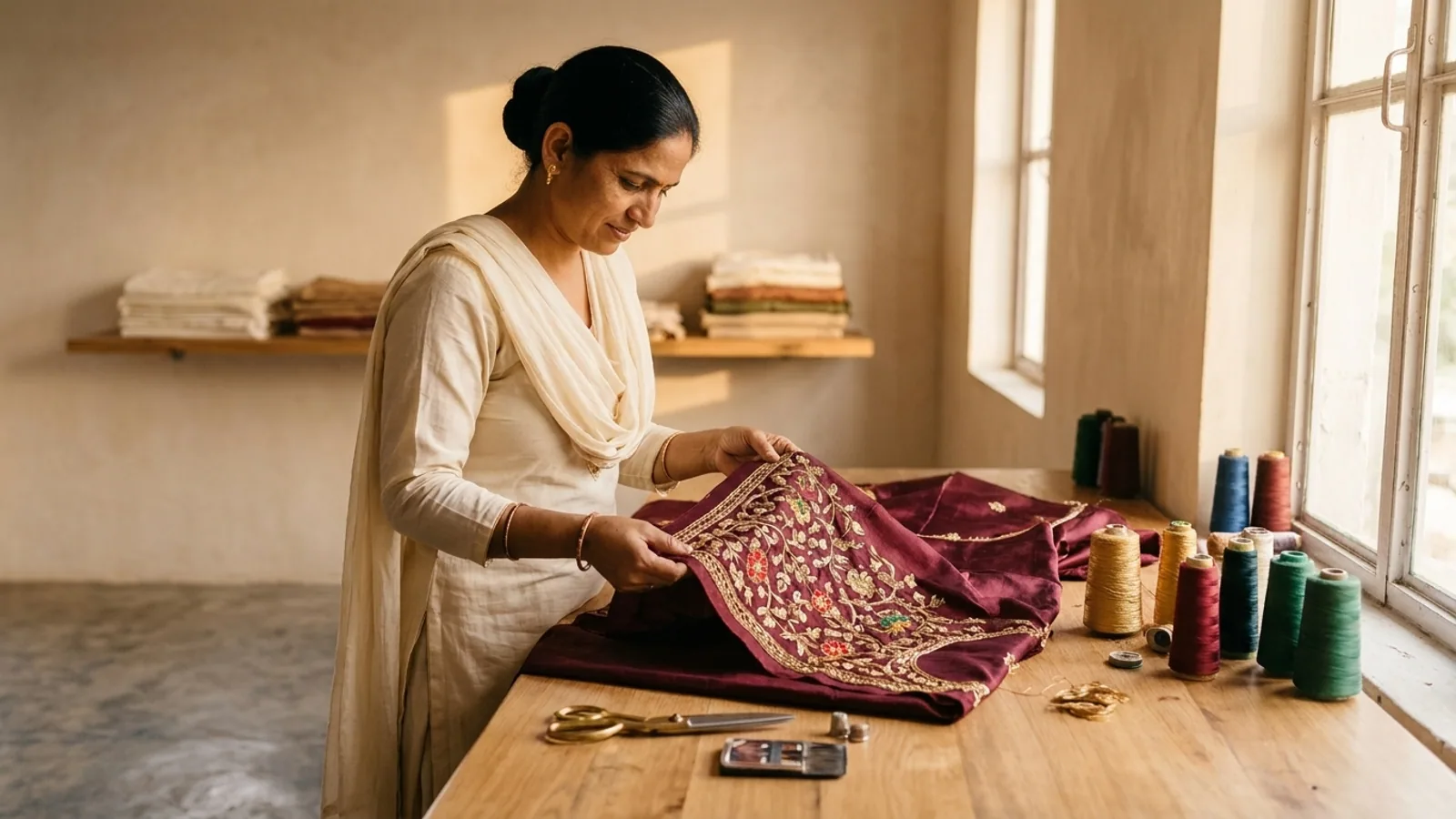
See how a custom embroidered Punjabi suit goes from an in-house digital pattern to finished embroidery machine stitching at Rai Designer.
When you wear a custom embroidered Punjabi suit, the finished outfit looks effortless—neat threadwork along the neckline, balanced borders on the hem, and a dupatta that ties the whole look together. Behind that clean finish, though, is a thoughtful step-by-step craft that blends careful design work with precision stitching. At Rai Designer, every women's suit starts right inside our studio, moving from our own embroidery software straight onto our embroidery machine.
Understanding how a suit is created helps you make better choices when planning your next outfit. Whether you want a soft floral motif for a family lunch or detailed festive borders for a celebration, knowing what happens behind the scenes makes the custom process feel simple and reassuring.
Starting With Your Idea and Fabric
Every suit begins with a conversation about how and where you plan to wear it. Some women come with a clear sketch or a favourite reference photo, while others only have a colour mood or a fabric feel in mind. Both are great starting points.
Before any pattern is built, we look closely at the fabric you plan to use. Lighter fabrics like organza, chinon, or cotton lawn behave very differently from denser materials like velvet, raw silk, or jaam cotton. A heavy, tightly packed stitch pattern can pull or weigh down a sheer weave, while very delicate threadwork can get lost on thick velvet pile. Matching the weight of the embroidery to the character of the cloth is the very first decision that sets the suit up for a graceful drape.
Designing a Custom Embroidered Punjabi Suit in Our Own Software
Once the overall direction is clear, the pattern is created inside our own embroidery software. This stage is often called digitising, and it is much more creative and technical than simply tracing an image.
Mapping Placement for a Flattering Fit
A women's Punjabi suit has several distinct areas—the neckline, the front panel, the hem or ghera, the sleeve cuffs, the salwar or trouser borders, and the dupatta edges or scattered motifs. Inside our software, each section is planned to scale so that the embroidery sits in proportion to the garment. Neckline depth, motif spacing, and border width are carefully balanced so the design looks harmonious rather than crowded.
Choosing Stitch Types and Thread Direction
Different stitch types create completely different visual textures. Satin stitches give smooth, glossy petals and crisp outlines. Tatami or fill stitches add rich coverage across larger motifs. Fine running stitches help build delicate vines, jaal patterns, and subtle shading. Even the angle of the stitch matters, because light reflects off embroidery thread differently depending on how each line lies.
In our software, we also control stitch density and underlay—the hidden foundation stitches that keep the fabric steady underneath the visible pattern. Setting the right underlay prevents puckering and keeps the embroidery smooth against the skin.
Testing Colour Harmony on Screen
Before the needle ever touches cloth, we plan thread shades and colour transitions digitally. We look at how metallic accents, tonal threads, or contrasting pops of colour will sit against the base fabric shade. Keeping design creation in-house means we can tweak spacing, resize a motif, or adjust a border cleanly before stitching begins.
Preparing the Fabric for the Embroidery Machine
Good embroidery relies just as much on preparation as on design. Once the digital file is ready, the fabric is pressed smoothly and paired with the right backing stabiliser. The stabiliser supports the cloth while the needle works at high speed, ensuring crisp edges and preventing distortion.
The fabric is then framed carefully so the grain stays straight and the tension is even across the hoop or frame. Taking time on alignment ensures that a neckline stays centred, side panels sit evenly, and borders run straight along the hem.
Stitching on Our Embroidery Machine
Now the digital design comes to life on our own embroidery machine. Each thread spool is loaded in the planned colour order, and needle tension is checked so the top thread and bobbin thread lock cleanly together.
Precision, Consistency, and Clean Finishes
Because the machine follows the exact stitch map built in our software, repeat motifs stay consistent from one sleeve to the other and along long dupatta borders. Corners line up cleanly, floral curves stay smooth, and dense festive sections keep an even sheen throughout the garment.
During stitching, we keep a close watch on the fabric surface, thread smoothness, and alignment as each colour layer builds up. Watching a plain length of cloth transform into an intricately patterned suit piece is always the most rewarding part of studio work.
Finishing Touches After Stitching
When the embroidery machine finishes its final stitch, the work is not quite done. The piece is gently unframed, loose jump threads are trimmed neatly by hand, and excess backing stabiliser is carefully cleared from the reverse side so the inside of the suit feels neat and comfortable to wear.
Finally, the embroidered sections are inspected under good light for smoothness, colour balance, and clean edges, then lightly steamed or pressed from the reverse to protect the lustre of the threadwork. From there, the suit is ready for tailoring into your preferred silhouette—whether that is a classic salwar suit, straight trousers, or a flared style.
Ready to Plan Your Own Suit?
Designing your own outfit does not have to feel complicated. Because Rai Designer handles both digital embroidery planning and machine stitching under one roof, we can guide you gently from an early idea to a finished embroidered suit made around your taste.
If you have an upcoming occasion or a design idea you would like to talk through, feel free to send us a message on WhatsApp at +91 6284623356 or explore raidesigner.com whenever you are ready. We are always happy to chat about fabrics, motifs, and colour combinations.
custom embroidery · punjabi suits · behind the scenes · embroidery machine